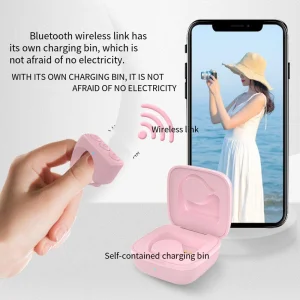
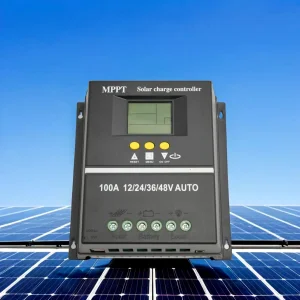
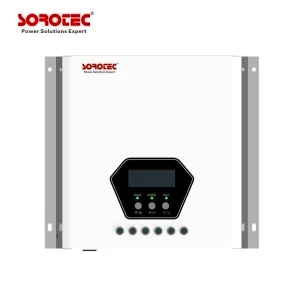
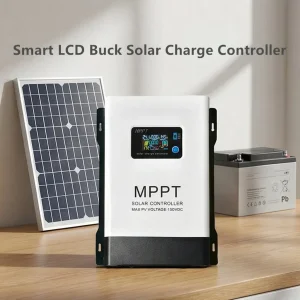
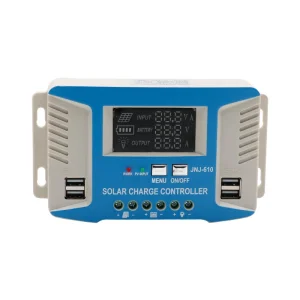
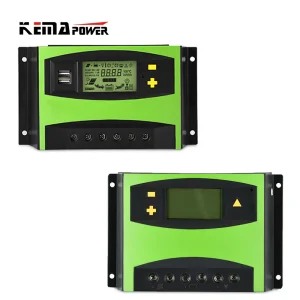
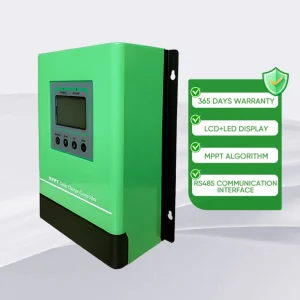
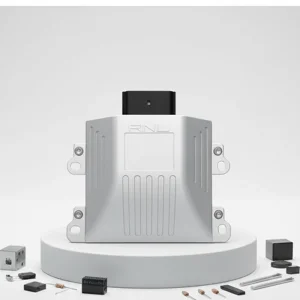
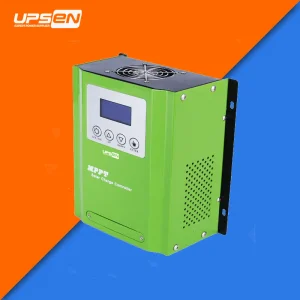
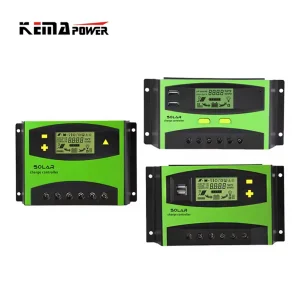
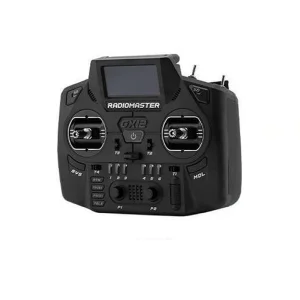
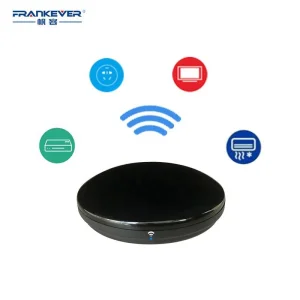
Four field-proven controller families form the backbone of Mulifanua installations — from low-power IoT peripherals to high-current MPPT solar regulation and multi-standard battery protection.
Mulifanua sits on the north-western tip of Upolu and is the single most important energy gateway in Samoa. It hosts the Faleolo International Airport corridor, the principal ferry terminal linking Upolu to Savai'i, and a fast-expanding strip of resorts, marina facilities and industrial yards. That combination creates a very specific demand profile for smart charging controllers: distributed solar generation, high-cycle marine batteries, airport and ferry-adjacent EV fleets, and 24/7 hotel loads that cannot tolerate voltage sag.
For factory-direct suppliers, Mulifanua is not a generic export destination. It is a high-corrosion, high-ambient-temperature deployment zone where conventional rooftop controllers fail early. Salt-laden air accelerates PCB edge corrosion, afternoon ambient temperatures push enclosure internals past 55°C, and grid frequency/voltage excursions during tropical storms mean controllers must survive frequent source switching between PV, mains and generator. Controllers destined for Mulifanua must be specified — not simply shipped.
The local commercial picture is also shifting. Samoa's renewable energy targets, combined with tourism operators investing in off-grid and hybrid power to control diesel costs, are driving demand away from low-cost PWM units toward multi-stage MPPT controllers with remote telemetry. Meanwhile the ferry and fishing fleets around the Mulifanua wharf need ruggedised DC charging for lithium and AGM banks that are cycled twice a day.
Resort and village-level PV arrays require MPPT controllers with wide PV input windows and stable conversion under partial cloud — a standard Mulifanua afternoon condition.
Wharf-adjacent operators need corrosion-resistant controllers and CAN-integrated EV charging for shuttles, service vehicles and vessel support equipment.
Faleolo-adjacent commercial sites demand 4-stage charging with equalisation to protect large flooded and gel battery banks during grid instability.
Each deployment context below maps to a specific controller configuration — the difference between a two-year replacement cycle and a ten-year asset.
Requirement: Silent night-time power, diesel minimisation, protection of expensive lithium banks.
Configuration: Sorotec SCC-series MPPT at 60–100A with 4-stage charging, generator dry-contact control and remote LCD telemetry. Controllers are mounted in shaded, forced-ventilated enclosures to hold internal temperature below 50°C.
Requirement: Overnight AC charging with load balancing against limited grid capacity.
Configuration: Smart EV charging controllers with CAN interface integration, enabling dynamic current derating when site load approaches the transformer ceiling.
Requirement: Dusk-to-dawn operation without grid dependence along unlit coastal roads.
Configuration: 20A–60A smart lighting street lamp controllers with photovoltaic panel charging, programmable dimming profiles and reverse-polarity protection.
Requirement: Continuous DC bus stability for refrigeration and workshop loads.
Configuration: High-voltage MPPT (180V PV input) units at 100A, combined with PWM backup controllers on secondary arrays for redundancy.
Consolidated manufacturing, testing and export capability from Hangzhou VoltEdge Charging Co., Ltd. — engineered for island logistics and long-lead project procurement.
A professional EV charging station manufacturer specialising in DC fast chargers and smart charging solutions for global electric mobility markets.
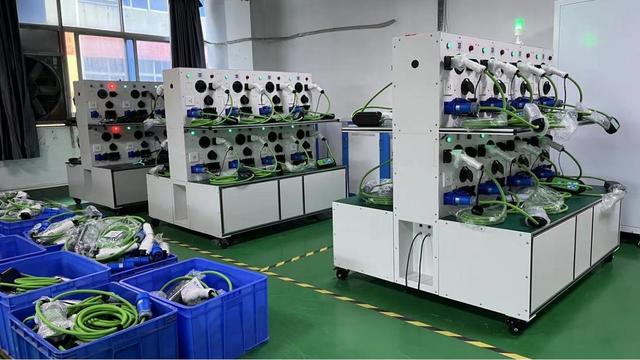
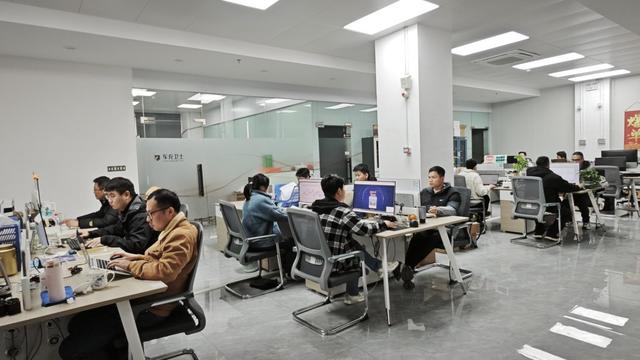
Hangzhou VoltEdge Charging Co., Ltd. is a professional EV charging station manufacturer specializing in DC fast chargers and smart charging solutions for global electric mobility markets. With a strong focus on innovation, efficiency, and sustainability, the company provides advanced charging technologies designed to support the rapid growth of electric vehicles across residential, commercial, and public infrastructure sectors.
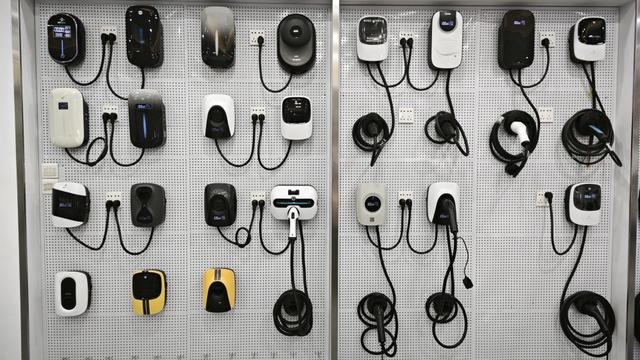
VoltEdge offers a comprehensive portfolio including DC fast charging stations, AC chargers, high-power charging modules, smart charging controllers, and integrated energy management systems. Its solutions are engineered to deliver high efficiency, stable performance, and seamless compatibility with various electric vehicle standards, making them ideal for fleet operations, highway charging networks, urban charging hubs, and private installations.
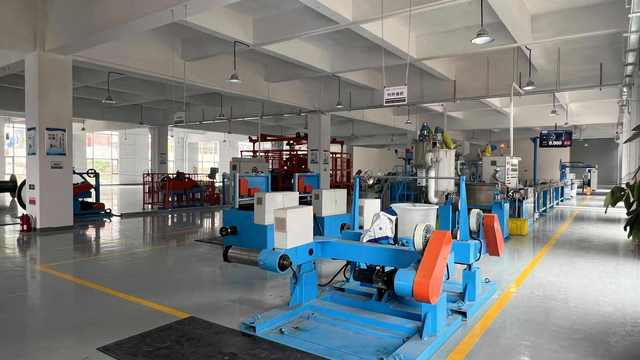
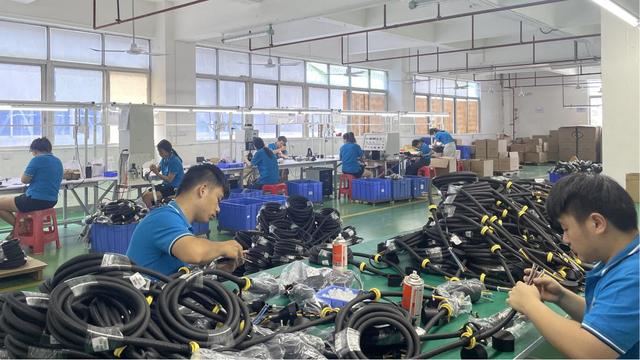
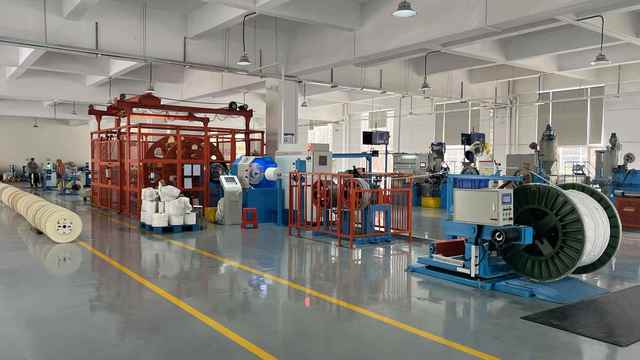
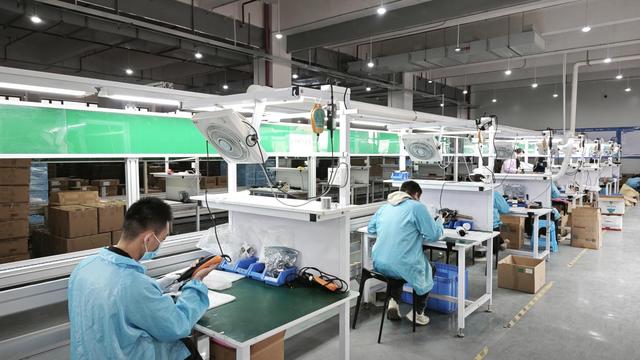
Equipped with modern production facilities and strict quality control systems, VoltEdge ensures reliable manufacturing and consistent product performance. The company supports global clients with flexible OEM and ODM services, offering customized designs, software integration, branding, and scalable charging solutions tailored to diverse project requirements.
Committed to driving the future of clean energy transportation, Hangzhou VoltEdge Charging Co., Ltd. continues to expand its international presence, delivering intelligent, safe, and high-performance EV charging infrastructure solutions worldwide.
For a buyer in Mulifanua, the practical question is not "where is the factory" but "will the factory still be able to ship in eighteen months, at the same specification, at a predictable price?" The Chinese power-electronics cluster around Hangzhou, Shenzhen and Ningbo answers that question better than almost any alternative source, for four structural reasons.
1. Vertical integration. MOSFETs, magnetics, aluminium heatsinks, PCBs, injection-moulded housings, LCD modules and firmware all originate within a few hundred kilometres. When one component line is disrupted, qualified alternates are already audited. This is the difference between a supply chain and a supply network.
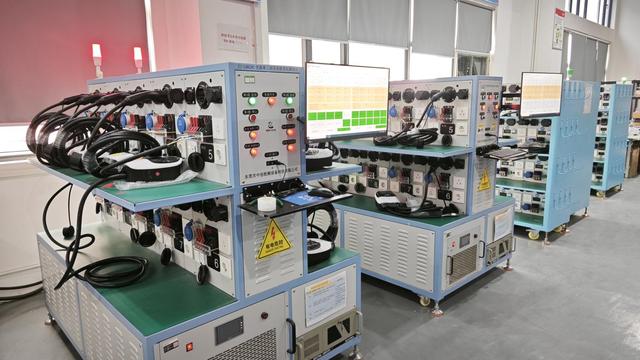
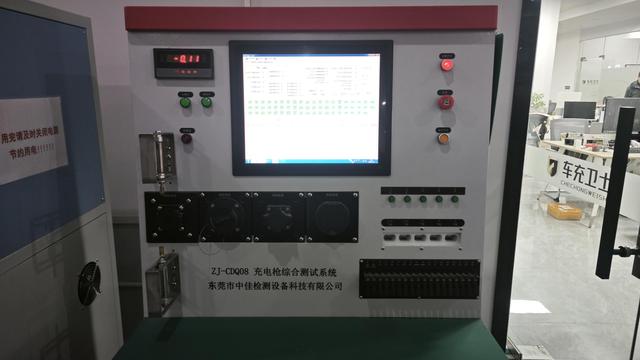
2. In-house DVT and burn-in. Every controller batch passes functional test, thermal cycling and 48-hour burn-in before packing. For Mulifanua-bound orders, additional salt-fog and high-humidity soak testing can be specified at quotation stage.
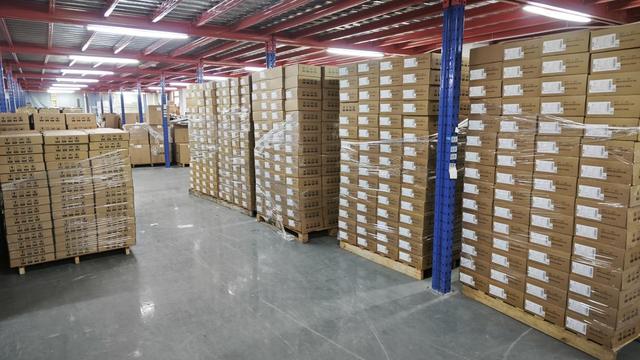
3. Export logistics maturity. Consolidated FCL and LCL routings to Apia are routine. Factories in this cluster already handle the documentation, ISPM-15 pallet compliance and moisture-barrier packaging that island consignees require.
4. Cost-to-specification ratio. The cluster's volume allows OEM and ODM customisation at near-catalogue pricing — custom branding, output voltage presets, firmware lockouts and enclosure variants — which is rarely achievable with Western or Southeast Asian contract manufacturers at comparable order sizes.
Audited alternate suppliers for every critical BOM line — no single-point failure on semiconductors or magnetics.
Moisture-barrier bags, desiccant and ISPM-15 compliant pallets configured for tropical sea freight to Apia.
Serial-level records retained for the full warranty period, enabling fast field diagnosis from Mulifanua.
Custom casing, voltage presets, branding, app integration and firmware configuration from modest MOQs.
Worldwide, the smart charging controller category is bifurcating. At the low end, commodity PWM controllers are being commoditised into near-zero margin. At the high end, controllers are becoming energy-management nodes — devices that talk to battery management systems, inverters, utility meters and cloud platforms, and that participate in load-shedding and demand-response programmes.
This second tier is where island markets like Samoa gain the most. A controller that can accept 180V PV input, auto-detect 12V/24V/36V/48V banks, run four-stage charging across gel, AGM and LiFePO4 chemistries, and expose that data over CAN or Wi-Fi is not a luxury in Mulifanua — it is the difference between a maintainable hybrid plant and one that fails at the first cloudy week.
Three global drivers are shaping the requirement set: the electrification of commercial fleets, the falling cost of LiFePO4 storage, and the regulatory pressure to document charging efficiency. All three push buyers toward controllers with measurable conversion efficiency, logged charge profiles and remote diagnostics — precisely the specification envelope VoltEdge manufactures to.
Complete catalogue — MPPT and PWM solar regulation, street-lighting controllers, EV charging interfaces and ruggedised remote handsets. All units ship factory-direct with OEM options.
Island deployments fail on logistics and documentation far more often than on electronics. VoltEdge structures export projects around both.
Compliance documentation. Controllers ship with CE and RoHS declarations, IEC-referenced test summaries and English-language installation manuals. For tendered projects, batch test certificates and material declarations can be supplied on request.
Voltage and frequency alignment. Samoa operates a 230V/50Hz distribution system. All AC-side controllers and EV charging interfaces are configured and labelled for 230V/50Hz before dispatch — no field re-configuration, no mis-labelled nameplates.
Environmental specification. Conformal coating, stainless fasteners and gasketed enclosures are available as an export option for Mulifanua's salt-air environment.
Spares and warranty. Recommended spares kits (fuses, terminal blocks, fans, display modules) can be bundled into the original shipment — critical when the next container is six weeks away.
Remote technical support. Firmware configuration files, wiring diagrams and fault-code tables are provided in English, with engineering response targets of 48 hours for standard enquiries.
OEM branding for local distributors. Samoan distributors and EPC contractors can order private-label enclosures, manuals and packaging to build local brand equity.
Where smart charging controller design is heading — and what it means for Mulifanua infrastructure planning.
180V+ PV input and full 12V–48V auto-detect become baseline, simplifying mixed-array retrofits on existing resort roofs.
Built-in Wi-Fi/4G and MQTT reporting allow Mulifanua operators to monitor charge profiles and faults remotely from Apia or overseas.
Adaptive charging curves that identify battery chemistry and age, extending LiFePO4 cycle life in high-cycle marine duty.
Controllers acting as demand-response nodes — derating EV charging and shifting solar harvest to stabilise island grid frequency.
Yes. VoltEdge exports factory-direct to Samoa and handles the full documentation set — commercial invoice, packing list, certificate of origin and conformity declarations. Consolidated LCL and FCL routings to Apia are routine, and we can coordinate with your local freight forwarder or recommend one experienced with the Apia route.
For anything with a lithium, gel or AGM bank above roughly 200Ah, an MPPT controller is the correct choice — typically the Sorotec SCC series at 60A–100A. MPPT extracts meaningfully more energy from a partially shaded or cloud-affected array and provides the multi-stage charging profile that protects expensive battery banks. PWM units remain cost-effective for small, well-matched arrays powering street lighting or small DC loads.
For Mulifanua-bound orders we offer an environmental export specification: conformal coating on control PCBs, stainless-steel fasteners, gasketed IP-rated enclosures and anti-corrosion terminal treatment. We also recommend installation inside shaded, ventilated cabinets rather than direct wall exposure.
OEM branding — enclosure labelling, manual cover and packaging — is available from modest order quantities. Firmware configuration such as voltage presets, charge-profile defaults and output limits can be applied at the factory at no additional tooling cost. Send your specification via the inquiry form and we will confirm MOQ against your exact configuration.
Yes. All AC-side controllers and EV charging interfaces destined for Samoa are configured, tested and labelled for 230V/50Hz before dispatch. DC-side solar controllers operate across the full 12V/24V/36V/48V auto-detect range independent of grid parameters.
Controllers carry a standard manufacturer warranty with serial-level batch traceability retained for the full period. We strongly recommend bundling a spares kit — fuses, terminal blocks, cooling fans and display modules — into the original shipment, since replacement parts shipped separately to Samoa incur significant lead time.
Yes. Our CAN-integrated EV charging controllers and telemetry-capable MPPT units are designed to interoperate with third-party inverters and energy management platforms. Provide the inverter model and communication protocol at inquiry stage and our engineering team will confirm compatibility before order.
Standard catalogue configurations ship within the quoted production window from order confirmation; OEM and custom-configured units require additional lead time confirmed at quotation. Ocean freight to Apia adds transit time depending on routing and consolidation schedule. We provide a written production and shipping schedule with every proforma invoice.
Send your array size, battery chemistry, load profile and environmental requirements. Our engineering team will return a configured recommendation, compliance documentation list and factory-direct quotation.
Send Inquiry Now VoltEdge Charging