Electric vehicle charging is no longer a concern for automakers alone. It is becoming part of daily operations across workplaces, travel routes, and commercial sites. For owners and operators, the right setup can support employee access, customer visits, and vehicle fleets. Yet a charger is only useful when its power, location, and operating hours match real demand.
So, what industries need charging infrastructure solutions? This guide explores ten sectors where charging can make a practical difference, from logistics and retail to hospitality, healthcare, and real estate. Their needs vary. A delivery depot may need several vehicles charging overnight, while a hotel might prioritize convenient guest parking and clear billing. The details matter.
Choosing infrastructure takes more than counting parking spaces. Operators should consider vehicle dwell times, available electrical capacity, future expansion, and who will maintain the equipment. Local utility requirements and incentives can also affect project costs and timelines, so assumptions should be checked with qualified professionals. Not every site. Some locations may need only a few chargers; others may require phased upgrades and careful load management.
This overview offers a starting point, not a universal ranking or a promise of savings. Actual results depend on usage, energy prices, site conditions, and charger reliability. Even a strong plan can miss something. Reviewing real traffic patterns and speaking with drivers can reveal needs that spreadsheets overlook. The following industries show where thoughtful charging access may help—and where each business should ask better questions before investing.
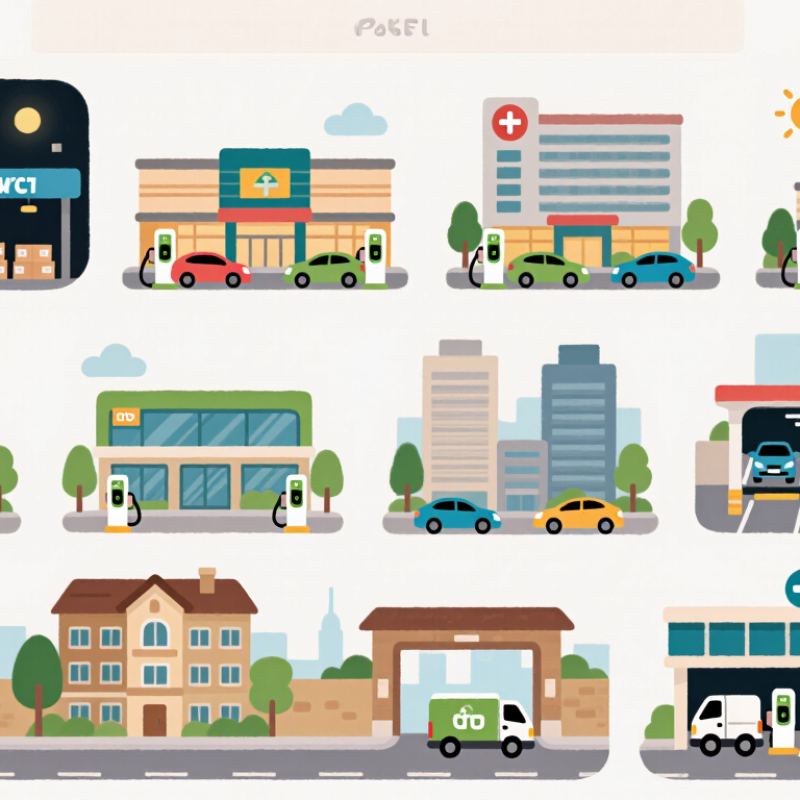
The International Energy Agency reported nearly 14 million electric cars sold worldwide in 2023, about 18% of all car sales. That rapid growth is reshaping demand for charging, but sales alone do not tell us where chargers are needed. Drivers charge at home, at work, and during longer trips. Local housing patterns, travel distances, and access to private parking all affect demand.
Not the whole story. A busy retail car park may need reliable daytime charging, while a residential complex may face evening peaks. Delivery depots often need several vehicles ready before morning shifts. These differences matter more than a single global sales figure. For planners, useful evidence includes charger use by hour, queue times, and how long vehicles remain parked. The data can be uneven, and forecasts can miss changing routines. That is worth admitting. Industries investing in charging should match equipment, power capacity, and operating hours to actual local use, then review those choices as electric-car ownership expands.
The International Energy Agency (IEA) reports that nearly 14 million electric cars were sold worldwide in 2023, representing about 18% of new car sales. The following ranking is a qualitative assessment of charging-infrastructure need, based on vehicle utilization, predictable parking or dwell time, and the operational value of charging on site.
| Rank | Industry | Typical EV Charging Demand | Best-Fit Charging Locations | Why Infrastructure Is Needed | Indicative Priority |
|---|---|---|---|---|---|
| 1 | Public Transit | Regular, high-utilization charging for battery-electric buses, often scheduled around depot returns and route breaks. | Bus depots, terminal layovers, and selected route-end locations. | Vehicles operate on fixed routes and schedules, making centralized charging and planned charging windows practical. | Very High |
| 2 | Logistics and Parcel Delivery | Overnight depot charging for delivery vans and trucks, with additional charging where vehicles return during the day. | Distribution centers, delivery depots, and fleet parking areas. | Vehicles commonly start and end routes at operating hubs, creating opportunities for managed, repeatable charging. | Very High |
| 3 | Taxi and Ride-Hailing Services | Frequent charging for vehicles with long daily operating hours; rapid charging can be useful between shifts or trips. | Vehicle hubs, high-demand urban locations, and public fast-charging sites. | High vehicle utilization can increase charging frequency and make charging access important to keeping vehicles in service. | Very High |
| 4 | Commercial Real Estate and Retail | Destination charging for customer, tenant, and employee vehicles during visits or work hours. | Shopping centers, retail parking lots, offices, and mixed-use developments. | Vehicles are already parked at these destinations, allowing charging to take place during normal dwell time. | High |
| 5 | Workplaces and Business Campuses | Scheduled daytime charging for employee and business vehicles parked for several hours. | Employee parking lots, office garages, and business campuses. | Predictable parking periods can support workplace charging and broaden access for drivers without reliable home charging. | High |
| 6 | Municipal and Public-Service Fleets | Depot-based charging for cars, vans, and service vehicles, with requirements varying by duty cycle. | Municipal depots, public works facilities, and government parking sites. | Many fleet vehicles return to a central facility, enabling planned charging and coordinated fleet operations. | High |
| 7 | Airports and Aviation Ground Operations | Charging for airport service vehicles and electrified ground-support equipment, alongside passenger and staff vehicle charging. | Ground-service depots, airport parking, staff lots, and terminal areas. | Airports concentrate vehicles and equipment in defined operating zones where charging access can be planned around work schedules. | High |
| 8 | Ports and Freight Terminals | Charging for electric trucks and cargo-handling equipment; some terminal operations may also require electrical power for vessels at berth. | Truck staging areas, equipment yards, terminal depots, and suitable berths. | Freight terminals concentrate heavy-duty vehicles and equipment, but charging design must account for high power needs and grid capacity. | High |
| 9 | Construction and Mining | Charging for electric site vehicles and machinery, often requiring site-specific power planning or mobile charging solutions. | Equipment yards, construction-site compounds, and mine service areas. | Vehicles and equipment may operate far from public chargers, so dependable on-site power can be essential to operations. | Medium–High |
| 10 | Hotels and Tourism | Destination charging for guest, staff, shuttle, and rental vehicles during overnight stays or extended visits. | Hotel parking areas, resorts, visitor centers, and rental-fleet locations. | Guests and visitors often leave vehicles parked for extended periods, making destination charging a practical service and fleet option. | Medium–High |
Data note: The IEA figure refers to global electric-car sales in 2023 and is rounded to nearly 14 million; it is not a count of all road vehicles or charging sessions.
Ranking note: Industry rankings and priority labels are comparative, qualitative assessments—not measured market shares or forecasts. Charging requirements vary by vehicle type, route, operating schedule, local electricity supply, and site conditions.
Reference: International Energy Agency, Global EV Outlook 2024, global electric-car sales data for 2023.
More than 54,000 were sold worldwide, about 35% more than in 2022.
Vehicles have different schedules. A van may return at noon, while a long-haul truck parks overnight.
Review routes, parking locations, dwell times, electrical capacity, and grid connection timelines. Actual schedules can be messy.
Drivers may park for six to eight hours. Moderate-power chargers can serve several vehicles during that time.
Clear signs, accessible bays, dependable payment, and chargers near useful parking areas all matter.
Early forecasts can be wrong. Track energy use, peak demand, maintenance, and downtime, then adjust capacity.
Chargers near gates can serve baggage tugs and service vehicles. Poor placement may create long detours.
Buildings may be far apart, workloads change by season, and rural grid capacity can vary. That complicates planning.
The rapid growth of electric vehicles is creating demand for charging infrastructure across far more sectors than passenger transport alone. With 14 million electric cars sold in 2023, according to the IEA, automakers, dealerships, and service centers need charging to support sales, maintenance, and customer use as EVs reach an 18% share of new car sales. Freight, delivery, and public transit operators also need reliable charging as electric truck sales expand, helping keep vehicles ready for daily routes and fleet operations.
So, what industries need charging infrastructure solutions? Commercial property owners, workplaces, hotels, and retailers can serve drivers while vehicles are parked, complementing a public network that has grown to more than 4 million chargers. Ports, airports, utilities, farms, and construction sites have distinct operational needs, from moving goods to powering equipment and supporting remote work. Together, these industries show that charging infrastructure is becoming an essential part of transport, business, and community operations.

 VoltEdge Charging