What Is Load Balancing in Charging Networks?

Time:2026-10-28 Author:Ethan
0%

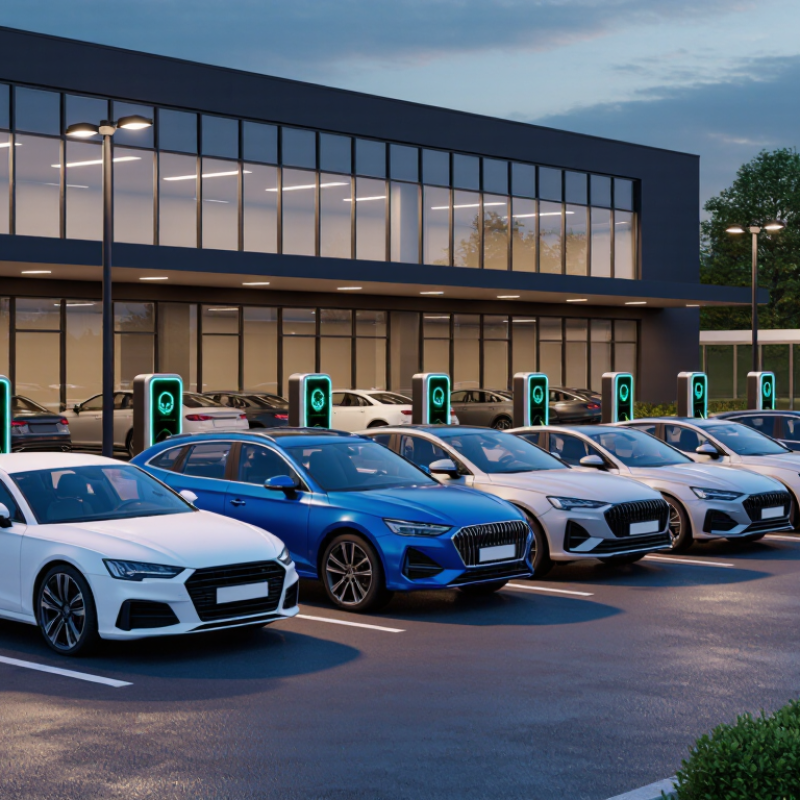
Understanding what is load balancing in charging networks begins with a practical scene: twelve electric vehicles arrive at an office car park at 5:30 p.m. If every charger draws maximum power, the site may exceed its electrical limit. Lights could flicker, protection systems could trip, and charging costs could rise sharply.

Load balancing distributes available electricity between chargers according to demand, site capacity, charging deadlines, and grid conditions. A central energy management system may slow one vehicle while allowing another to charge faster. It can also respond to solar production, battery storage, or changing electricity prices. The goal is simple. Use power wisely.

Professor Willett Kempton, a leading vehicle-to-grid researcher, has said that electric vehicles are “a distributed energy resource that can both consume and supply electricity.” His observation explains why charging networks need more than additional hardware. They need coordination. Smart controls can turn parked vehicles into flexible electrical loads, without compromising driver needs.

Yet load balancing is not automatically perfect. Poor data, weak communication, or inaccurate departure times can produce unfair charging results. A driver expecting 80 percent battery capacity may receive less. That matters.

Real networks also face uneven demand, aging transformers, and unpredictable arrivals. Therefore, a reliable system must measure conditions continuously and communicate clearly with users. Operators should test failure scenarios, publish performance data, and review charging outcomes. Technology helps, but judgment remains essential. The following discussion examines how load balancing works, why it matters, and where current approaches still need improvement.
What Is Load Balancing in Charging Networks?

What Load Balancing Means: Coordinating EV Power Within a Site Limit

What Is Load Balancing in Charging Networks?

What Load Balancing Means: Coordinating EV Power Within a Site Limit

Load balancing in an EV charging network means sharing available electrical power among several vehicles. The goal is simple: keep total demand below a site’s safe capacity. A building may have a 100 kW connection, yet four chargers could request 30 kW each. Without control, demand reaches 120 kW. The system measures current consumption and adjusts charging power in near real time. One vehicle may receive 30 kW, while another receives 20 kW.

This coordination protects electrical equipment and reduces costly peak-demand charges. It can also prevent nuisance trips at the main breaker. Practical systems use meter data, charger status, vehicle needs, and configured limits. They may pause a session briefly, then restore power when demand falls. That change should be visible to operators and explained clearly to drivers. Otherwise, a technically correct system can still feel unreliable.

Load balancing works best when the site limit reflects real conditions, not only a number on a drawing. Refrigeration, elevators, heating, and lighting can change demand quickly. A forecast may be wrong. We should admit that. Conservative limits leave capacity unused, while aggressive settings can create instability. Regular commissioning, measured data, and tested fallback settings support safer operation. At a busy site, charging power becomes a managed resource, not a fixed promise.

Why It Matters: DOE Rates Level 2 Up to 19.2 kW and DC Fast to 350 kW

What Is Load Balancing in Charging Networks?

Load balancing controls how much electricity each charger receives at a site. This matters because charging power varies sharply. The U.S. Department of Energy rates Level 2 charging up to 19.2 kW. DC fast charging can reach 350 kW, according to the DOE Alternative Fuels Data Center. Without control, several vehicles may overload a building’s electrical capacity. A smart system can reduce power temporarily, then restore it when demand falls. That prevents unnecessary infrastructure upgrades and keeps charging more predictable.

Picture a parking garage with twelve vehicles arriving after work. If every vehicle requests maximum power, the site may hit its demand limit within minutes. Load balancing shares available capacity across vehicles and building equipment. It can prioritize vehicles leaving soon or those with lower battery levels. The International Energy Agency reported more than four million public charging points worldwide at the end of 2023. More chargers create more pressure on local grids. The numbers are encouraging, but real-world behavior remains difficult to predict.

Tips: Check the site’s transformer rating before adding chargers. Set clear power priorities. Measure peak demand monthly. Test control settings during busy periods. Do not assume a 350 kW charger always delivers 350 kW; vehicle limits, battery temperature, and state of charge can reduce output. That detail is easy to miss. Field data should guide revisions, because an efficient plan on paper may perform poorly during a rainy evening rush.

What Is Load Balancing in Charging Networks? - Why It Matters: DOE Rates Level 2 Up to 19.2 kW and DC Fast to 350 kW

Load balancing dynamically distributes available electrical capacity among charging points so that total site demand stays within the service limit while vehicles continue charging safely and efficiently.

Charging Network Dimension Level 2 AC DC Fast Charging Why Load Balancing Matters
Primary electrical output Up to 19.2 kW per charging port Up to 350 kW per charging port Higher-power equipment can consume a large share of a site's available capacity, especially when several vehicles charge simultaneously.
Common charging application Homes, workplaces, apartments, parking facilities, and longer dwell times Highway corridors, public charging hubs, and locations requiring shorter dwell times Balancing helps match power delivery to vehicle dwell time, battery state of charge, and site constraints.
Typical charging duration Several hours, depending on battery size, vehicle acceptance rate, and starting state of charge Approximately 20–60 minutes for a partial recharge, depending on vehicle and charger limits Power can be shifted toward vehicles with shorter available dwell times while maintaining an overall site limit.
Power demand profile Moderate demand that may become significant across many connected ports High demand that can rise quickly when multiple vehicles charge at high power Dynamic control reduces coincident peak demand and lowers the risk of exceeding the site's electrical capacity.
Example connected load 4 ports × 19.2 kW = 76.8 kW 2 ports × 350 kW = 700 kW Without coordination, the combined rated load may exceed the available transformer, switchgear, or utility service capacity.
Illustrative 100 kW site limit Four ports could share 100 kW, subject to individual vehicle limits Two 350 kW ports would require substantial power sharing to remain within 100 kW Example allocation: two active vehicles may receive 50 kW each, or power may be prioritized according to charging needs.
Control approach Reduce or increase output per port as other ports connect or disconnect Allocate power among dispensers, cabinets, and active vehicle sessions Dynamic load balancing responds in real time instead of relying only on a fixed maximum setting.
Primary operational benefit Serve more vehicles without immediately expanding electrical infrastructure Operate high-power charging assets while protecting the site's maximum demand limit Balancing can improve asset utilization, support more simultaneous sessions, and reduce avoidable infrastructure upgrades.
Main design constraint Building service capacity, circuit ratings, distribution panels, and parking duration Utility service size, transformer capacity, medium-voltage equipment, and demand charges The control system must respect electrical protection settings and the lowest-capacity component in the power path.
Best-fit balancing strategy Share capacity across ports using scheduled or real-time allocation Prioritize vehicles by state of charge, departure time, connector availability, or charging session rules A clearly defined priority policy prevents one session from consuming disproportionate site capacity.
Peak-demand exposure Moderate High Peak demand generally increases as charger power and the number of simultaneous sessions increase.
Grid and equipment protection value Important Critical Load balancing helps prevent overloads, nuisance trips, service interruptions, and operation above rated equipment limits.
Reference note: The power figures use the U.S. Department of Energy charging-level ratings stated in the title: Level 2 AC charging up to 19.2 kW and DC fast charging up to 350 kW. Actual delivered power depends on the vehicle, charger, electrical service, temperature, battery state of charge, and site-control settings. The 100 kW allocation examples are illustrative calculations, not universal operating requirements.

How It Works: Measure, Prioritize, and Allocate Power in Real Time

What Is Load Balancing in Charging Networks?

How It Works: Measure, Prioritize, and Allocate Power in Real Time

Load balancing keeps a charging network within its electrical limits. It measures each charger’s power draw, site capacity, vehicle demand, and building load. The International Energy Agency’s Global EV Outlook 2024 reports more than four million public charging points worldwide in 2023. That scale makes simple, unmanaged charging increasingly impractical.

The process starts with measurement. Smart meters track a site every few seconds. Software then prioritizes vehicles by departure time, battery level, charging speed, or operational importance. A vehicle leaving soon may receive more power. Another vehicle can wait briefly. Small delays matter.

Allocation happens continuously. If a building approaches its 500-kilowatt limit, the system reduces selected charging sessions before the main breaker trips. National Renewable Energy Laboratory research on managed charging shows that coordinated schedules can reduce coincident demand and improve grid flexibility. Yet models are not reality. A delayed vehicle may still need immediate energy, and meter data can arrive late. Field operators should test conservative limits, monitor exceptions, and review performance after busy periods. The best system is not always the most aggressive one.

Control Models: Static Sharing, Dynamic Allocation, and V2G

Load Balancing in Charging Networks: Static Sharing, Dynamic Allocation, and V2G

A charging site with ten vehicles may face a simple physical limit: one transformer, many drivers, and unequal departure times. Static sharing divides available power evenly, such as 7.2 kW per vehicle across four active sessions. It is predictable and easy to audit. However, it can waste capacity when one vehicle is nearly full while another needs urgent energy. The International Energy Agency reported nearly four million public charging points worldwide at the end of 2023, with more than 600,000 added that year. Scale makes basic sharing less sufficient.

Dynamic allocation treats charging power as a moving resource. Software can prioritize departure time, battery state, tariff periods, and feeder limits. A vehicle leaving at 7:00 a.m. may receive 90 kW, while a fully charged vehicle receives almost nothing. This approach reduces local peaks, but it depends on accurate data and stable communication. Small errors matter. A missing departure time can produce an unfair schedule. Field experience also suggests that drivers dislike silent changes, even when energy delivery remains adequate.

Vehicle-to-grid control extends the model beyond consumption. During a constrained period, connected vehicles can discharge electricity, then recharge during lower-demand hours. NREL research on managed charging highlights the value of coordinating EV demand with grid conditions, while the IEA identifies flexible EV charging as an emerging grid resource. V2G is not automatically beneficial. Battery warranties, user consent, compensation, and local interconnection rules require careful design. The model is powerful, but still imperfect.

Load Balancing in Charging Networks: Control Models

The chart compares estimated evening peak grid demand for a representative 100-port charging site with 7.2 kW AC chargers. Static sharing distributes available power evenly, dynamic allocation prioritizes vehicles by demand and departure time, while V2G can discharge connected vehicles to support the grid and reduce peak demand.

How to Assess Results: Peak kW, Utilization, Cost, and OCPP 2.0.1

What Is Load Balancing in Charging Networks?

Load balancing controls charging power when several vehicles share limited electrical capacity. Assessing it requires more than checking whether sessions start successfully. In field reviews, I compare peak kW before and after control. A lower peak can protect site capacity and reduce demand-related costs. However, an unusually low peak may indicate delayed charging or insufficient power.

Utilization shows how effectively available capacity serves vehicles. Measure delivered energy against connector capacity, operating hours, and vehicle demand. For example, eight connectors rated at 11 kW may rarely deliver 88 kW simultaneously. Track hourly load curves, session completion rates, and waiting time. A strong result keeps peaks controlled without leaving vehicles undercharged. That balance is difficult.

Cost analysis should include energy tariffs, demand charges, infrastructure limits, and missed charging opportunities. OCPP 2.0.1 can support this review through transaction events, meter values, charging schedules, and status information. Use synchronized timestamps and consistent meter units. Check how the system behaves during weak connectivity. Data gaps can distort conclusions. I have seen dashboards report excellent utilization while offline sessions were missing. That finding changed the evaluation. A reliable assessment compares a clear baseline with several operating periods, then investigates exceptions instead of hiding them.

FAQS

What is load balancing in an electric vehicle charging network?

It controls how much electricity each charger receives. This prevents several vehicles from overloading the site.

Why is load balancing necessary at busy charging locations?

Twelve vehicles may arrive after work and request maximum power. Without control, the building’s electrical capacity can be exceeded within minutes.

How much power can different chargers request?

Level 2 charging can reach 19.2 kW. DC fast charging can reach 350 kW, depending on conditions.

Does a 350 kW charger always deliver 350 kW?

No. Vehicle limits, battery temperature, and charge level can reduce output. The number looks impressive, but it can mislead.

How does a system decide which vehicle receives more power?

It may consider departure time, battery level, charging speed, or operational importance. A vehicle leaving soon could receive priority.

What happens when a building approaches its power limit?

The system temporarily reduces selected charging sessions. This helps prevent a main breaker trip.

What information should operators measure?

They should track charger demand, building load, site capacity, and peak usage. Monthly reviews can reveal hidden problems.

Can managed charging always predict real-world demand accurately?

No. Meter data may arrive late, and a delayed vehicle may suddenly need energy. Plans can fail during a rainy evening rush.

What should operators check before installing more chargers?

Check the transformer rating and set clear power priorities. Test conservative settings during busy periods, then revise them using field data.

Conclusion

What is load balancing in charging networks? It is the process of coordinating electricity among multiple electric vehicle chargers so a site stays within its available power limit while delivering energy efficiently. Because Level 2 charging can reach up to 19.2 kW and DC fast charging can reach up to 350 kW, unmanaged charging may create demand spikes, increase operating costs, or exceed a facility’s electrical capacity.

A load-balancing system measures site conditions and charger activity in real time, then prioritizes and allocates power according to factors such as vehicle needs, charging time, and available capacity. Common control models include static power sharing, dynamic allocation, and vehicle-to-grid operation. Performance can be assessed through peak kilowatts, charger utilization, energy costs, and communication capabilities supported by standards such as OCPP 2.0.1. Together, these tools help charging sites improve reliability, reduce waste, and support more vehicles without unnecessary infrastructure upgrades.

Ethan

Ethan

Ethan is a seasoned marketing professional with a deep expertise in our company's innovative product line. With a passion for sharing knowledge and insights, he takes the lead in regularly updating our corporate blog, where he explores industry trends, product features, and effective marketing......