Top Future Trends in Electric Vehicle Charging

Time:2026-10-16 Author:Henry
0%

Electric vehicles are moving from early adoption into everyday transport. Charging must now become faster, simpler, and more dependable. A driver should not need three apps, two memberships, or a hidden cable fault to complete a journey. At a highway station, the experience may soon include megawatt charging, contactless payment, battery-aware routing, and shaded parking with solar panels. At home, smart chargers could delay charging until renewable electricity is available or grid demand falls. These changes raise an important question: what is the future of electric vehicle charging?

Fatih Birol, Executive Director of the International Energy Agency, said, “The transition to clean energy is happening worldwide and it’s unstoppable.” His observation supports a broader charging shift, from isolated power points toward an intelligent energy network. Future chargers may balance vehicle demand, local solar generation, and grid stability. Bidirectional charging could allow parked cars to support buildings during short peak periods. However, the technology is not automatically convenient. Rural coverage remains uneven. Hardware standards can confuse consumers. Battery degradation and cybersecurity also require careful management. Progress will be real, but uneven.

This outline examines the leading trends shaping charging infrastructure. It considers ultra-fast stations, wireless charging, battery swapping, home energy systems, roaming payments, and vehicle-to-grid services. It also questions optimistic forecasts. Faster charging needs stronger local networks. More chargers need responsible maintenance. A cleaner vehicle is not enough if the charging experience remains unreliable. The future should be measured by practical access, transparent pricing, safe design, and dependable performance—not by impressive prototypes alone.

Top Future Trends in Electric Vehicle Charging

Charging Technology and Infrastructure Evolution

Electric vehicle charging is evolving from isolated roadside equipment into a connected energy system. Charging technology now combines faster power delivery, intelligent load management, and safer thermal control. A modern station may adjust charging speed when several vehicles arrive together. This protects the local transformer and reduces unnecessary grid stress. Small details matter.

Bidirectional charging is also gaining practical attention. Compatible vehicles could support homes during short outages or help balance electricity demand. However, this process needs clear safety controls, accurate metering, and reliable communication between the vehicle, charger, and grid. Standards must remain consistent across regions. Otherwise, convenience becomes confusion.

Infrastructure planning is becoming more data-driven. Site designers examine traffic patterns, parking duration, weather, accessibility, and available electrical capacity before installation. A rural charger may need battery storage because grid upgrades are expensive and slow. Urban sites require careful cable placement, lighting, drainage, and maintenance access. These physical details influence daily usability.

Reliability still needs work. Chargers can fail because of damaged connectors, software errors, or poor weather protection. Regular inspection, remote monitoring, and rapid repair are essential. Cybersecurity also deserves equal attention, especially when chargers exchange payment and energy data. The industry is advancing quickly, but not every new feature solves a real problem. More testing in ordinary conditions would reveal which improvements truly help drivers.

Top Future Trends in Electric Vehicle Charging - Charging Technology and Infrastructure Evolution

Trend Current Technology Range Expected Direction by 2030 Key Data or Indicator Infrastructure Impact
Expansion of public charging networks AC destination charging and DC fast charging are deployed across homes, workplaces, retail areas, highways, and fleet depots. More corridor charging, urban curbside charging, and high-utilization fleet hubs. The global public charging stock exceeded 4 million points in 2023 and increased by more than 40% during that year. Requires faster permitting, standardized site design, upgraded distribution feeders, and better geographic coverage.
Higher-power DC fast charging Passenger-vehicle chargers commonly range from approximately 50 kW to 350 kW, depending on the vehicle and site. More 150–500 kW installations, with improved thermal management and charging curves. A compatible vehicle may add a substantial driving range in roughly 10–30 minutes under suitable conditions. High-power sites need medium-voltage connections, liquid-cooled cables, load balancing, and larger transformers.
Megawatt charging for heavy-duty transport Heavy commercial vehicles generally use high-power DC systems, often above 350 kW at dedicated depots. Megawatt-class charging is expected to support electric trucks, buses, and logistics fleets. Emerging systems target approximately 1 MW or more, subject to vehicle battery size, duty cycle, and grid capacity. Truck stops will require depot-scale energy planning, queue management, high-capacity substations, and on-site storage.
Smart charging and load management Charging schedules can be adjusted according to electricity prices, grid congestion, departure time, and battery state of charge. Managed charging will become common for residential, workplace, public, and commercial fleets. A coordinated charging session can shift demand away from system peaks without changing the required departure energy. Reduces simultaneous peak demand and may defer some grid upgrades when supported by suitable tariffs and controls.
Vehicle-to-home and vehicle-to-grid charging Bidirectional charging is technically available in selected vehicle, charger, and market configurations. More vehicles will provide backup power, renewable-energy shifting, and grid-balancing services. Typical residential bidirectional systems are designed around approximately 5–12 kW, while grid services may use aggregated fleets. Requires bidirectional hardware, interconnection rules, battery-warranty clarity, cybersecurity, and flexible electricity markets.
Integration with renewable energy and storage Charging sites increasingly combine grid electricity with solar generation, stationary batteries, and energy-management software. More charging hubs will use batteries to reduce grid peaks and absorb variable renewable generation. Stationary storage can reduce the instantaneous grid connection required for high-power charging, although results vary by site load profile. Encourages hybrid charging sites, peak-demand control, local energy management, and improved resilience during outages.
Plug-and-charge interoperability Digital authentication can use standardized communication between the vehicle and charger to reduce manual payment steps. Seamless authentication, roaming, automatic billing, and transparent charging data will become more widespread. Standards such as ISO 15118 support secure vehicle-to-charger communication and can enable automated authorization. Operators will need compatible software, reliable connectivity, data governance, and consistent user-account management.
Wireless and automated charging Stationary wireless systems commonly target approximately 3.7–22 kW for passenger vehicles; automated conductive systems are also developing. Greater use in taxis, autonomous fleets, accessible parking, buses, and high-frequency commercial operations. Wireless charging efficiency can approach the low-to-mid 90% range under suitable alignment and system conditions. Requires embedded or surface-mounted equipment, precise alignment, interoperability testing, and higher installation costs.
Reliability, uptime, and predictive maintenance Remote monitoring, payment diagnostics, temperature sensing, and fault notifications are increasingly used at charging sites. Charging networks will be managed more like critical digital infrastructure, with service-level and uptime reporting. Reliability depends on hardware, software, connectivity, weather, maintenance response, and local electrical conditions. Requires modular replacement, remote resets, spare-parts planning, standardized fault codes, and transparent uptime measurement.
Cybersecurity and data protection Charging infrastructure connects vehicles, payment systems, network platforms, buildings, and utility interfaces. Security-by-design, encrypted communication, access control, software updates, and incident monitoring will become standard requirements. The attack surface expands as charging points become remotely managed and connected to energy-management systems. Operators need secure device identity, segmented networks, patch management, privacy controls, and tested recovery procedures.
More accessible urban and residential charging Home charging remains important, but residents without private parking depend on workplace, curbside, shared, and public facilities. Cities will expand curbside charging, apartment charging, accessible parking spaces, and charging-as-a-service models. Residential AC charging typically operates around 3.7–22 kW, depending on the electrical connection and charger configuration. Needs equitable siting, parking enforcement, standardized payment, building-code updates, and protection for pedestrians and accessibility users.

Note: Performance ranges are indicative and vary by vehicle battery capacity, charging state, ambient temperature, electrical connection, site design, and applicable regulations. Global public-charging figures are based on widely reported international energy-market statistics for 2023.

Ultra-Fast, Wireless, and Bidirectional Charging Systems

Ultra-fast charging is moving from a premium feature toward everyday infrastructure. The International Energy Agency reported over 4 million public charging points worldwide at the end of 2023. Public charging capacity also grew by about 40% that year. High-power stations can add hundreds of kilometers during a short coffee break. However, grid connections remain the difficult part. A 350-kilowatt charger may require costly local upgrades, especially beside busy highways. Ten minutes can still become thirty.

Wireless charging offers a quieter alternative. Pads beneath parking spaces transfer electricity without exposed cables or wet connectors. SAE J2954 standards support consistent wireless charging for light-duty vehicles. Current systems commonly target power levels near 11 kilowatts. Dynamic charging could eventually power vehicles beneath roads, but road construction would be expensive. Efficiency losses also need clearer measurement. Convenience should not hide wasted electricity.

Bidirectional charging changes the vehicle from a consumer into a temporary battery. The International Energy Agency identifies smart charging and vehicle-to-grid systems as important flexibility tools. During evening peaks, parked vehicles could return energy to buildings or local networks. A 2024 U.S. Department of Energy vehicle-grid integration report highlights managed charging as a way to reduce grid stress. Yet battery warranties, user consent, and payment rules remain unsettled. The cable may flow both ways. Responsibility must do the same.

Smart Charging, Energy Management, and Grid Integration

Electric vehicle charging is becoming an energy-management challenge, not simply a parking service. The International Energy Agency’s Global EV Outlook 2024 reports nearly 14 million electric cars were sold in 2023. It also records more than four million public charging points worldwide. That growth will pressure local transformers during evening peaks. Smart charging can delay sessions, reduce demand spikes, and use electricity when renewable generation is stronger.

Grid integration needs better coordination. The IEA estimates that public charging capacity may need to expand almost sixfold by 2035 under stated policies. Managed charging can help avoid expensive grid upgrades, while vehicle-to-grid systems may provide short-term flexibility. Yet these systems need reliable communication, fair customer incentives, and clear cybersecurity controls. Smart charging is not magic. Forecasts can fail during heatwaves, outages, or sudden travel surges. Field operators should measure real load behavior instead of trusting simulations alone.

Tips: Set charging windows around local peak periods. Use dynamic tariffs carefully. Keep a manual override for emergencies. Check transformer temperatures and feeder capacity before adding chargers. Test interoperability across different charging hardware and software. Small trials reveal uncomfortable problems early. The practical goal is not maximum charging speed everywhere, but dependable energy delivery with fewer grid shocks.

Top Future Trends in Electric Vehicle Charging

Smart Charging, Energy Management, and Grid Integration

Smart Charging

Managed charging can shift flexible vehicle demand away from peak periods, helping reduce pressure on local distribution networks.

Energy Management

Charging software increasingly coordinates vehicles with tariffs, on-site solar generation, batteries, and building loads.

Grid Integration

As charging infrastructure expands, flexible charging and vehicle-to-grid capabilities can support grid balancing where market rules and standards allow.

Chart: Approximate global public EV charging points, rounded in millions. Source: International Energy Agency, Global EV Outlook 2024.

Renewable Energy, Battery Storage, and Sustainable Charging

Top Future Trends in Electric Vehicle Charging

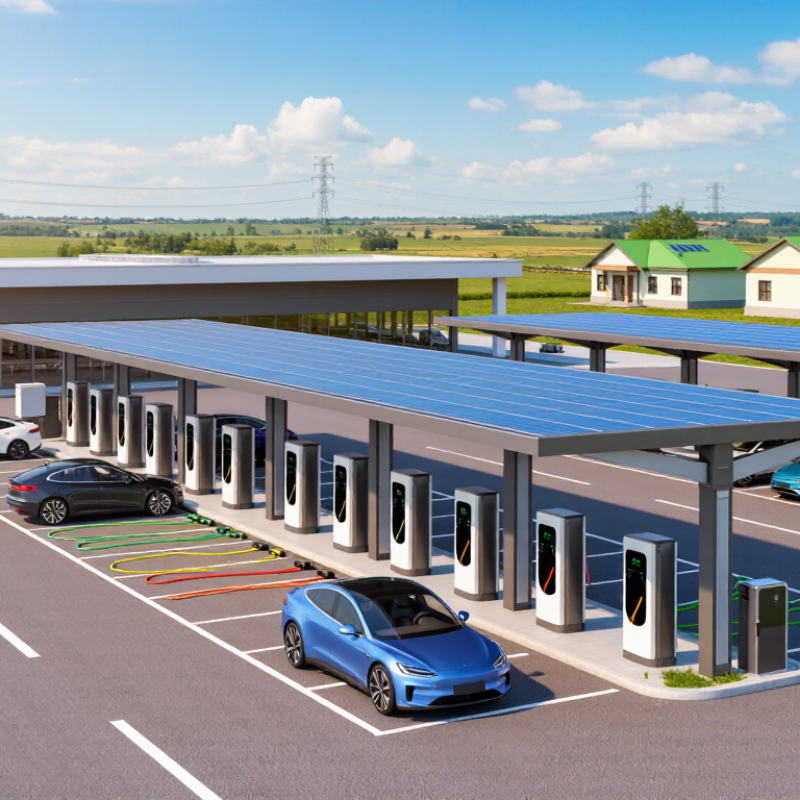
Renewable energy will increasingly shape how electric vehicles receive power. Solar canopies over parking areas turn unused roof space into daytime charging assets. Wind generation can support overnight charging when demand often falls. The International Energy Agency reported over 14 million electric cars sold globally in 2023. That growth will pressure grids, especially near apartment buildings and busy highways. Charging must become cleaner, not merely faster.

Battery storage can buffer renewable electricity and reduce sudden grid demand. The IEA’s Batteries and Secure Energy Transitions report found electric vehicle battery demand reached about 750 GWh in 2023. This scale creates technical experience that stationary storage can also use. A local battery could charge slowly from solar, then deliver power to several vehicles during evening peaks. The idea is practical, but battery replacement, fire safety, and recycling still require closer attention. We should not pretend storage is impact-free.

Smart charging will connect vehicles, renewable generation, and storage more intelligently. The IEA recorded more than 40% growth in public charging points during 2023. However, more sockets do not guarantee reliable access. Drivers need transparent pricing, accurate availability data, and equipment that works in heat or heavy rain. Vehicle-to-grid systems may eventually return electricity during grid stress. Their commercial value remains uncertain. Real-world trials must measure battery wear, user patience, and renewable output together. That evidence matters more than optimistic demonstrations.

Public Access, Standardization, and the Future Charging Experience

Top Future Trends in Electric Vehicle Charging

Public access will shape the next charging experience. Drivers need reliable stations near apartments, workplaces, shops, and highways. A charger hidden behind restricted parking is not truly accessible. Site audits often reveal simple problems, such as unclear signs, poor lighting, or blocked cable paths. These details create stress during a low-battery trip. Payment should also feel predictable. Drivers should see the price, estimated charging time, and connector availability before arriving. That level of transparency builds trust.

Standardization will make charging less confusing. Shared technical requirements can improve connector compatibility, safety checks, data exchange, and maintenance quality. Yet standards alone cannot solve every problem. Local grids, weather, traffic, and building design still affect performance. A cold evening may slow charging. A crowded station may expose weak queue management. The industry must test real conditions, not only laboratory targets. Some current assumptions may be wrong, and user feedback should challenge them.

Tips: Choose stations with visible access information and clear pricing. Check connector compatibility before leaving home. Leave space for other drivers. Report damaged cables, confusing instructions, or unreliable payment screens. Small reports can guide better maintenance. Public charging should feel ordinary, not like a technical exam.

FAQS

How is electric vehicle charging becoming more intelligent?

Modern chargers can adjust power when several vehicles arrive together. This protects local transformers and reduces grid stress. Small details matter. Smart control also connects vehicles, storage, and renewable electricity.

Why can ultra-fast charging still take longer than expected?

High-power chargers can add hundreds of kilometers during a short break. However, grid connections may require expensive upgrades. A ten-minute session can become thirty. Traffic, queueing, and limited local capacity also affect the experience.

What is wireless vehicle charging?

Wireless systems use pads beneath parking spaces to transfer electricity. Drivers avoid handling exposed cables or wet connectors. Current systems often provide around eleven kilowatts. Efficiency losses still need clearer testing.

Could roads eventually charge vehicles while they drive?

Dynamic charging could transfer electricity through equipment beneath road surfaces. It might reduce stopping time and battery size. Road construction would be expensive, though. The idea sounds convenient, but wasted electricity must be measured honestly.

How can bidirectional charging support homes and power networks?

Compatible vehicles can send stored electricity back to buildings during short outages. They may also reduce evening demand peaks. Safe controls, accurate meters, and reliable communication are essential. Battery wear and payment rules remain unsettled.

How can renewable energy improve charging?

Solar canopies can produce daytime electricity above parking spaces. Wind power may support overnight charging when demand is lower. Cleaner electricity matters, not only faster charging. Weather can still make supply uneven.

Why is battery storage useful at charging sites?

Local batteries can store solar power slowly, then serve several vehicles during evening peaks. They may reduce sudden pressure on the grid. Replacement, fire protection, and recycling require careful planning. Storage is not impact-free.

What makes a charging station reliable and practical?

Designers should study traffic, parking time, weather, accessibility, and electrical capacity. Rural sites may need local storage. Urban stations need good lighting, drainage, cable placement, and maintenance access. A charger that works only in mild weather is not reliable enough.

How can charging operators improve safety and trust?

Regular inspections can find damaged connectors and weather-related problems. Remote monitoring can identify software faults before drivers arrive. Payment and energy data also need strong cybersecurity. More ordinary-condition testing would reveal which features truly help. We may still be overconfident.

Conclusion

The future of electric vehicle charging will be shaped by faster, smarter, and more flexible technologies. Charging infrastructure is expected to evolve from simple plug-in stations into integrated energy networks that support ultra-fast charging, wireless power transfer, and bidirectional systems. These developments can make charging more convenient while allowing vehicles to supply electricity back to homes or the grid when needed. A key question is what is the future of electric vehicle charging, and the answer lies in combining convenience, efficiency, and intelligent energy management.

Smart charging platforms will coordinate charging times, reduce pressure on electricity networks, and help drivers control costs. Renewable energy, battery storage, and efficient charging equipment will also support a more sustainable system by balancing supply and demand. Meanwhile, wider public access, consistent standards, and simpler payment and connection processes will improve the overall charging experience. Together, these trends will create a cleaner, more reliable, and increasingly user-centered foundation for electric mobility.

Henry

Henry

Henry is a dedicated marketing professional with a profound expertise in the company's offerings. With years of experience in the industry, he possesses an impressive understanding of the market dynamics and consumer behaviors that drive success. Henry is committed to sharing his insights through......