China Best EV Charging How to Expand Your Business Network

Time:2026-11-18 Author:Oliver
0%

Building an EV charging business network in China takes more than installing chargers near busy roads. Operators need to understand where drivers stop, how long vehicles remain parked, and whether a site can support reliable power and maintenance. A row of chargers beside a shopping center may look promising, but evening queues or limited parking can quickly weaken the business case. Small details matter.

For companies considering how to expand a charging network for business, a practical plan starts with local demand and clear site criteria. Compare traffic patterns, nearby housing and workplaces, grid capacity, access, and competing stations. Then assess potential partners, such as property owners, fleet operators, and service providers. Define who handles installation, repairs, customer support, and payment issues before opening a location. These checks help teams make decisions they can explain and review.

Pilot sites can reveal problems that spreadsheets miss. A charger may be technically sound yet inconvenient to reach, poorly signed, or difficult to maintain during busy periods. Track usage, uptime, customer feedback, and repair response times, then use those findings to adjust the next phase. Not every location will perform as expected. That is useful information, if the team records it honestly. Expansion should follow evidence, not pressure to announce a larger network. With reliable equipment, realistic partnerships, and regular performance reviews, businesses can grow coverage while protecting service quality and customer trust.
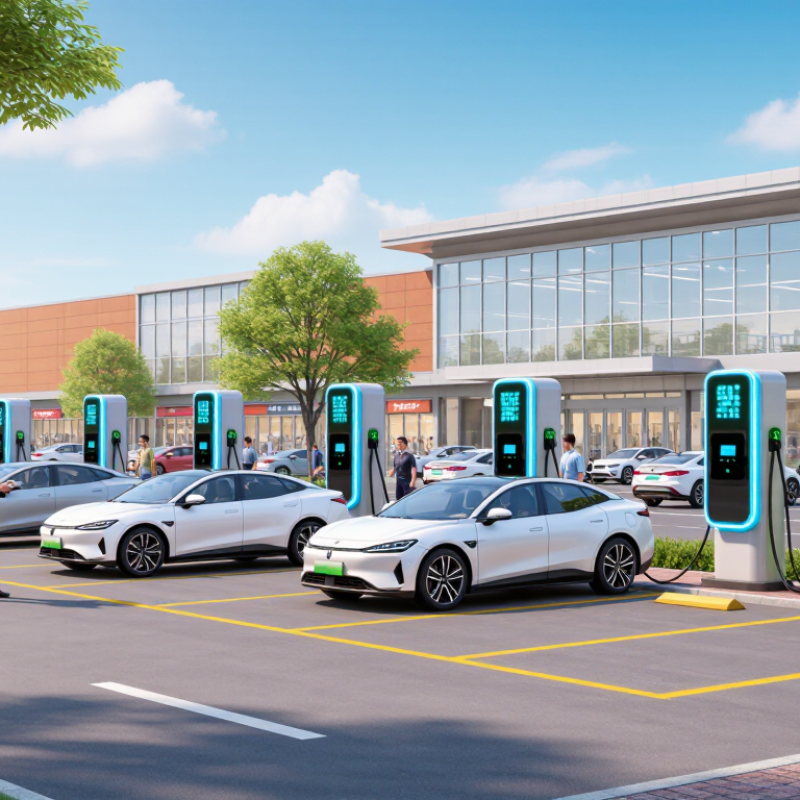
China Best EV Charging How to Expand Your Business Network

Overview of China's EV Charging Equipment Market

China’s EV charging equipment market is large, fast-moving, and unevenly distributed. The International Energy Agency’s Global EV Outlook 2024 reported nearly 2.7 million public charging points in China by the end of 2023, about 70% of the global total. China also had roughly 85% of the world’s fast chargers. These figures show market scale, not guaranteed returns. Busy urban corridors may attract steady use, while quieter routes can leave equipment idle.

Demand is supported by rapid EV adoption and continued infrastructure investment. Opportunities include AC chargers at workplaces and residential sites, and DC chargers near highways and logistics hubs.

However, location, grid capacity, uptime, and service access matter as much as rated power. The IEA figures cover public chargers, not private home units. Comparisons can mislead. Before expanding a business network, map traffic, connection costs, and likely local usage.

Tips: Start with a small cluster near proven traffic. Track sessions per charger, peak-hour queues, and maintenance time for three months. Then review the power mix and site spacing. Forecasts are rarely perfect. Keep assumptions visible.

Key Criteria for Selecting Chinese Charging Solutions

China’s charging market offers scale, but a large factory output does not guarantee a reliable business network. The International Energy Agency’s Global EV Outlook 2024 reports that China held about 70% of the world’s public charging points in 2023. That depth can support sourcing and deployment, yet buyers should verify performance at the actual site.

Start with vehicle compatibility, connector options, and charging power. Then check whether the charger’s communications protocol works with your payment, monitoring, and back-office systems. Ask for test records, clear warranty terms, and spare-parts lead times. Fit matters. A unit that handles a busy depot may be oversized for a small retail car park. Confirm the site’s grid capacity before choosing fast chargers; peak loads can trigger costly upgrades.

Ask suppliers for uptime definitions and service response targets, not just headline efficiency figures. Request references from installations with similar weather, usage, and network conditions. The IEA’s report also documents rapid growth in global public charging, making interoperability and future capacity important purchasing criteria. Pilot a small batch first. Review fault logs, connection stability, and maintenance needs over several weeks. Paper specifications can still miss real operating problems. A pilot may add time, but skipping it can make expansion harder.

Mapping Suppliers, Installers, and Industry Partners

Mapping a dependable network starts with local evidence, not a long supplier list. The International Energy Agency’s Global EV Outlook 2024 reports that public charging points grew by about 40% worldwide in 2023, with China holding the largest share. That scale creates opportunity, but it also makes partner selection more important. Ask equipment suppliers for clear specifications, spare-parts timelines, and field-service procedures. Check whether installers can document site surveys, cable routing, load assessments, and commissioning tests. Small details matter: a cabinet’s delivery date or an unclear handover checklist can delay an otherwise ready site.

Build relationships across the whole project chain. Work with property operators, electrical contractors, grid-service providers, and maintenance teams before finalizing locations. Share realistic deployment schedules and agree on who handles faults after opening. Keep a simple partner scorecard: response time, installation rework, service coverage, and spare-parts availability. Useful data beats polished claims. A spreadsheet can look complete while hiding weak local coverage; I would verify references and inspect one completed installation where possible. That extra step takes time. It can prevent costly surprises. The IEA’s growth figures describe market momentum, not guaranteed returns, so test each partnership against local demand, grid capacity, and site access before expanding.

Building Cross-Border Distribution and Service Channels

Cross-border distribution for EV charging equipment is built through dependable local partners, not a long contact list. The International Energy Agency’s Global EV Outlook 2024 reports that public charging points worldwide grew by 40% in 2023, reaching more than four million. That growth creates opportunity, but each market has different installation practices, payment habits, and service expectations.

Start with a distributor that can handle more than sales. Ask who will check site conditions, train installers, stock replacement cables, and answer a fault report at 8 a.m. local time. Set clear service targets, spare-parts arrangements, and escalation steps before shipping the first unit. Small details matter. A connector delayed in customs can leave a charging site idle, even when the hardware is sound. Confirm documentation and import requirements with qualified local professionals; assumptions do not travel well across borders.

Build a modest pilot with a few carefully chosen sites. Track installation time, repeat faults, parts availability, and customer response—not only units sold. Share these findings with the distributor and revise training materials together. I would not treat a signed agreement as proof of readiness; it may reveal gaps only after the first service call. The IEA’s growth figure signals expanding infrastructure, but it does not guarantee demand in every region. Local interviews and field checks should shape each next step.

Strengthening Business Networks Through Long-Term Cooperation

Long-term cooperation can turn an EV charging project into a dependable business network. In China, work closely with site owners, fleet operators, installers, and electricity providers. Agree on responsibilities before equipment arrives: who checks the site, handles maintenance, and responds when a charger is offline? Clear routines build trust. Small delays still happen.

The International Energy Agency’s Global EV Outlook 2024 reported that public charging points worldwide exceeded four million in 2023, up about 40% from 2022. This growth signals opportunity, not guaranteed profit. Partners should review local utilization, connection capacity, and service costs together. Share operating data regularly, while protecting customer information. Quarterly meetings can identify practical issues, such as confusing parking signs or parts that take too long to replace. I have seen plans overlook these details; they matter more than polished presentations.

Tips: Start with one shared pilot site. Record uptime, repair time, and user complaints. Set a monthly check-in, name one contact per partner, and revise the agreement when real operating experience exposes gaps.

China Best EV Charging How to Expand Your Business Network - Strengthening Business Networks Through Long-Term Cooperation

Partnership Area Long-Term Cooperation Action Practical Indicator How to Measure Review Cadence
Charging-site development Work with property owners, commercial facilities, and local infrastructure partners to assess sites and coordinate installation, access, and maintenance responsibilities. Site readiness and delivery progress Track completed site assessments, permits, grid connection steps, equipment installation, and commissioning against each project plan. Monthly during development; quarterly after launch
Grid connection and energy supply Engage distribution network operators and energy suppliers early to confirm connection requirements, capacity, tariffs, and any demand-management options. Connection lead time and available capacity Record the time from a complete connection application to energisation, along with the agreed site capacity and any documented constraints. At each project milestone
Equipment interoperability Define technical requirements with charger suppliers and software partners before procurement; verify supported communication protocols and test integration before deployment. Successful interoperability tests Document test results for charger-to-management-system communication, remote status reporting, transaction handling, and fault reporting. OCPP is an open protocol used for communication between charging stations and central systems. Before launch and after material system updates
Network uptime and maintenance Agree service levels, incident escalation routes, spare-parts responsibilities, and preventive-maintenance schedules with service partners. Availability and repair time Availability (%) = operational hours ÷ scheduled service hours × 100. Track outages separately by cause and record time from fault detection to restoration. Monthly
Customer access and roaming Coordinate with mobility-service providers and charging-network partners to improve customer access across participating locations and clarify pricing and support responsibilities. Cross-network session success rate Measure completed charging sessions divided by attempted sessions through each agreed access route; review failed-session reasons and resolution ownership. Monthly or quarterly, depending on transaction volume
Safety and compliance Maintain a shared compliance checklist with project, equipment, construction, and operations partners; assign owners for inspections and corrective actions. Inspection completion and open actions Track required inspections completed, unresolved safety actions, action owners, and closure dates against applicable local requirements and project documentation. At commissioning and scheduled inspections
Data and cybersecurity Set written rules for data access, retention, incident notification, system updates, and responsibilities across the charging-service supply chain. Access reviews and incident-response readiness Maintain records of authorised accounts, completed access reviews, security incidents, and response exercises; limit shared data to agreed operational needs. At least quarterly and after significant changes
Commercial performance Use a joint business review to assess utilisation, operating costs, customer feedback, and expansion opportunities before committing to additional sites. Energy delivered and charger utilisation Report energy delivered in kWh and define utilisation consistently, such as charging time divided by available connector time. Compare sites over equivalent periods. Quarterly
Relationship governance Establish named contacts, decision rights, escalation steps, shared project records, and a documented process for changing scope or responsibilities. Issue-resolution time and action closure Log issues, accountable owners, agreed due dates, escalation dates, and closure status in a shared action register. Monthly operational meeting; annual agreement review

Measurement note: The indicators above are operational definitions for planning and partner reviews, not reported company results or guaranteed performance targets. Confirm applicable technical, safety, data, and grid-connection requirements with qualified local professionals before deployment.

FAQS

How large is China’s public EV charging market?

By the end of 2023, China had nearly 2.7 million public charging points, about 70% of the global total. Roughly 85% of the world’s fast chargers were there. Scale does not promise profit.

Where might charging equipment see steady use?

Busy urban corridors, workplaces, residential sites, highways, and logistics hubs can offer opportunities. Quieter routes may leave chargers idle. A map cannot guarantee demand.

What should operators check before choosing a site?

Check traffic, grid capacity, connection costs, and likely local usage. Estimate peak-hour queues and service access. These details can change the economics.

How should buyers choose between AC and DC chargers?

AC units may suit workplaces and residential sites. DC chargers may fit highways and logistics hubs. Match rated power to real demand, not just the busiest possible day.

Which technical details matter when selecting equipment?

Confirm vehicle compatibility, connector options, and charging power. Check that communications protocols work with payment, monitoring, and back-office systems. Fit matters.

What should buyers ask suppliers to provide?

Request test records, clear warranty terms, and spare-parts lead times. Ask for uptime definitions and service response targets. Headline efficiency alone says little.

Why run a pilot before expanding?

A small pilot can reveal connection faults, maintenance needs, and weak uptime. Review fault logs over several weeks. Paper specifications can miss real problems.

What operating data should a new network track?

Track sessions per charger, peak-hour queues, and maintenance time for three months. Then review power mix and site spacing. Forecasts can be wrong; the road may tell a different story.

Conclusion

China’s EV charging equipment market offers growing opportunities for businesses seeking to develop reliable charging services and reach new customer groups. Success starts with understanding market needs and comparing charging solutions according to compatibility, safety, performance, operating costs, and after-sales support. Businesses can then map potential suppliers, installation providers, and industry partners to identify the capabilities needed to build and maintain a dependable network.

To grow beyond a single market, companies can establish cross-border distribution and service channels, while adapting their approach to local customer requirements and infrastructure conditions. A practical plan for how to expand a charging network for business should combine clear partner roles, consistent technical support, and ongoing communication. Long-term cooperation helps partners improve service quality, respond to changing demand, and create a stronger foundation for sustainable business growth.

Oliver

Oliver

Oliver is a seasoned marketing professional with a wealth of expertise in driving brand awareness and engagement. With a deep understanding of our company's product offerings, he consistently delivers high-quality content that enriches our professional blog. His insights not only shed light on......