Maintaining electric vehicle charging equipment is becoming a practical priority for homes, workplaces, fleets, and public networks. AC Level 2 chargers, DC fast chargers, depot units, and portable systems each face different stresses. Heat, moisture, cable strain, dust, software faults, and repeated connector use can reduce reliability. A clean screen means little if the cable is damaged underneath.
EV charging specialist John Voelcker has emphasized, “A charger must work when the driver needs it.” That principle shapes every section of this guide. Learning how to maintain electric vehicle charging equipment requires more than wiping the housing. Operators should inspect plugs, sockets, cables, cooling vents, emergency stops, status lights, and mounting points. Look closely. Small cracks can become expensive failures.
A useful routine combines daily observation, scheduled cleaning, electrical testing, firmware checks, and professional inspection. Technicians should record fault codes, charging interruptions, operating temperatures, and repair dates. These details reveal patterns that memory often misses. A loose connector may create heat marks. A blocked air filter may slow a fast charger. Water can enter through a poorly sealed cabinet.
No checklist is perfect. Maintenance plans sometimes overlook user behavior, seasonal weather, or cable abuse. That weakness deserves attention. Equipment should be reviewed after storms, construction work, unusual voltage events, or repeated payment failures. Qualified professionals must handle internal electrical components and follow the manufacturer’s service instructions. Reliable charging depends on disciplined care, accurate records, and the willingness to question routines that appear successful.
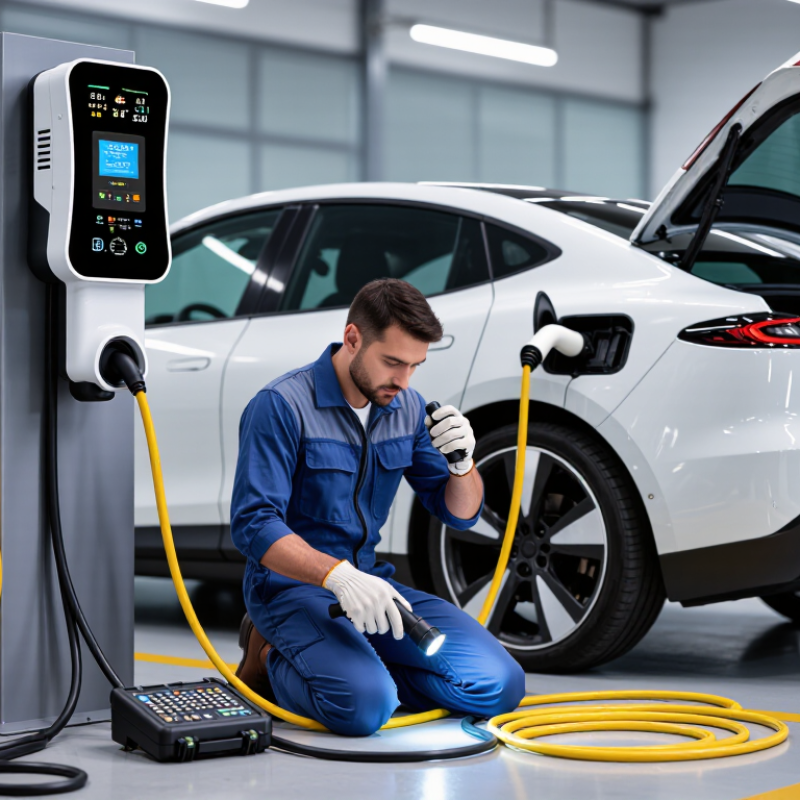
In 2026, EV charging equipment mainly includes AC chargers, DC fast chargers, and wireless charging systems. AC chargers suit homes, offices, and overnight parking. They transfer alternating current through the vehicle’s onboard charger. DC fast chargers send direct current to the battery more quickly. Wireless systems use electromagnetic pads beneath the vehicle. They offer convenience, but alignment and efficiency still need attention.
Each type requires different maintenance. Inspect AC cables for cuts, flattened sections, or exposed wiring. Check connectors for dirt, moisture, and loose pins. DC equipment needs careful cooling-system checks because high power creates significant heat. Keep ventilation openings clear. Wireless pads should remain level and free from stones or metal objects. Small faults matter. A qualified technician should test protective devices, grounding, insulation, and emergency controls according to local requirements.
Routine records improve reliability. Note inspection dates, charging errors, unusual sounds, and temperature changes. Software updates should follow approved technical instructions and be completed through secure procedures. A clean cabinet does not prove safe operation. Intermittent faults may disappear during testing, which makes diagnosis difficult. No checklist is perfect. Technicians should compare readings over time rather than trust one inspection. Maintenance also depends on weather, traffic, installation quality, and daily user behavior. That part is easy to underestimate.
| Equipment Type | Typical Electrical Characteristics | Typical Charging Use | Main Maintenance Tasks | Recommended Routine | Important Safety Checks |
|---|---|---|---|---|---|
| AC Level 1 Portable Charger | Single-phase AC; commonly connected to a standard household outlet; generally the slowest charging category. | Overnight home charging, emergency charging, and low-mileage daily use. | Inspect the plug, cable, in-cable control box, strain relief, and visible signs of heat, cracking, moisture, or corrosion. | Visual inspection before each use; clean with a dry or slightly damp cloth when disconnected; keep stored in a dry, protected location. | Do not use damaged cables, extension cords, loose outlets, or adapters not approved for EV charging. |
| AC Level 2 Wall-Mounted Charger | Single-phase AC, commonly in the 208–240 V range; output is usually limited by the vehicle, circuit, and charger rating. | Residential garages, workplaces, apartments, hotels, and destination charging locations. | Check enclosure, mounting hardware, connector holster, cable insulation, indicator lights, grounding, protective devices, and ventilation clearances. | Monthly visual inspection; clean the housing and connector area as needed; arrange electrical testing according to local regulations and the installation manual. | Use a dedicated, correctly rated circuit; verify ground-fault protection and avoid operating with a hot, loose, or discolored receptacle. |
| AC Destination or Networked Charger | AC charging with communication, access control, usage records, and sometimes load management or payment functions. | Public parking, commercial sites, multi-unit residential buildings, and fleet locations. | Perform connector and cable checks, test user controls, review fault logs, verify communication, inspect surge protection, and confirm accurate energy readings. | Weekly site inspection for high-use locations; monthly review of alarms and connectivity; scheduled preventive service at least annually or as required by the operator. | Keep emergency stop functions, protective devices, access areas, and cable routes clearly identified and unobstructed. |
| DC Fast Charger | Converts AC to regulated DC inside the charging station; commonly used for substantially faster charging than AC equipment. | Highway corridors, fleet depots, service areas, and locations requiring short charging stops. | Inspect high-power cables and connectors, cooling systems, filters, fans, cabinet seals, power modules, contactors, communication systems, and fault records. | Daily or per-shift visual checks at busy sites; monthly operational review; periodic professional electrical and thermal inspection based on usage and service requirements. | Only qualified personnel should open the cabinet or work on high-voltage components; isolate power and follow lockout/tagout procedures before service. |
| Liquid-Cooled High-Power Charger | High-current DC equipment using a coolant loop to manage heat in the cable or power electronics. | Commercial fleets, heavy-duty vehicles, and charging sites requiring sustained high power. | Check coolant level and condition, hoses, pumps, heat exchangers, leak sensors, cable temperature monitoring, filters, and thermal alarms. | Inspect the cooling system regularly; replace coolant, filters, or other service parts only at the intervals and specifications stated by the equipment manufacturer. | Stop operation if there is a coolant leak, abnormal odor, overheating, damaged insulation, or repeated temperature-related shutdown. |
| Pantograph or Automated Bus Charger | High-power conductive charging using an automated overhead or roof-mounted connection system. | Electric buses and fixed-route commercial vehicles with scheduled opportunity charging. | Inspect contact surfaces, alignment systems, mechanical actuators, sensors, protective barriers, grounding, and communication with the vehicle. | Check before each operating shift; clean contact areas as specified; perform periodic alignment and mechanical inspections by qualified technicians. | Create an exclusion zone during charging and service; never bypass interlocks or operate with misalignment or exposed conductive parts. |
| Wireless or Inductive Charger | Transfers energy across an air gap between ground equipment and a vehicle receiver without a conductive plug. | Residential parking, automated fleets, taxis, buses, and locations where hands-free charging is useful. | Inspect ground pads and vehicle receivers, check alignment sensors, verify foreign-object detection, review thermal performance, and remove debris. | Inspect the surface before use; keep the charging area clean and level; perform periodic electrical, communication, and alignment tests. | Keep metal objects and unauthorized equipment away from the charging zone; follow electromagnetic-field and medical-device precautions required by local guidance. |
Examine the housing, display, cable, connector, and mounting points. Look for cracks, loose panels, water marks, and heat discoloration. Check cable insulation carefully. Small damage can worsen under repeated charging.
The connector should fit firmly without force. Its pins should look clean and dry. Watch for warmth, burn marks, stiffness, or intermittent charging. A successful session does not prove the connector is healthy.
Remove dust using suitable dry tools. Do not spray liquid into sockets or control areas. Store the cable off wet ground. Keep walkways clear and dry.
A qualified technician should test grounding, insulation resistance, residual-current protection, and emergency shutoff functions. They should also inspect terminals, contactors, and communication circuits. Never open energized equipment.
Record the inspection date, readings, fault codes, damage, and corrective actions. Note temperature and charging conditions when faults appear. Photographs can clarify unusual damage. Records often reveal repeated problems.
Read and record the error code. Inspect the cable, connector, cooling vents, and protection device. Avoid repeated resets when the fault returns. Repeated trips need professional diagnosis.
Review firmware, diagnostic logs, clock settings, and session records regularly. Back up configurations before updates. Use a tested rollback plan. Check alerts after updating, because charging behavior may change.
Perform a complete charging test under normal load. Compare the result with previous records. Confirm normal shutdown and protective functions. The checklist helps, but it can still miss humidity-related or intermittent faults.
Maintaining electric vehicle charging equipment in 2026 requires a clear understanding of the main charger types, including home, workplace, public, and high-power charging systems. Each type has different operating conditions, power requirements, and maintenance needs. A reliable maintenance plan should include routine inspections of the enclosure, display, ventilation openings, indicator lights, and mounting points. Operators should also check for signs of overheating, moisture, physical damage, or loose connections before equipment is used.
Learning how to maintain electric vehicle charging equipment also involves cleaning and protecting cables, plugs, and connectors from dust, water, oil, and corrosion. Electrical safety checks should confirm proper grounding, insulation, protective devices, and stable power delivery. Software and communication systems should be updated, monitored, and tested regularly to support accurate operation. When problems occur, technicians should document error messages, inspect visible components, test connections, and determine whether the issue requires resetting, component replacement, or professional repair. Consistent maintenance improves safety, charging reliability, equipment lifespan, and user confidence.

 VoltEdge Charging